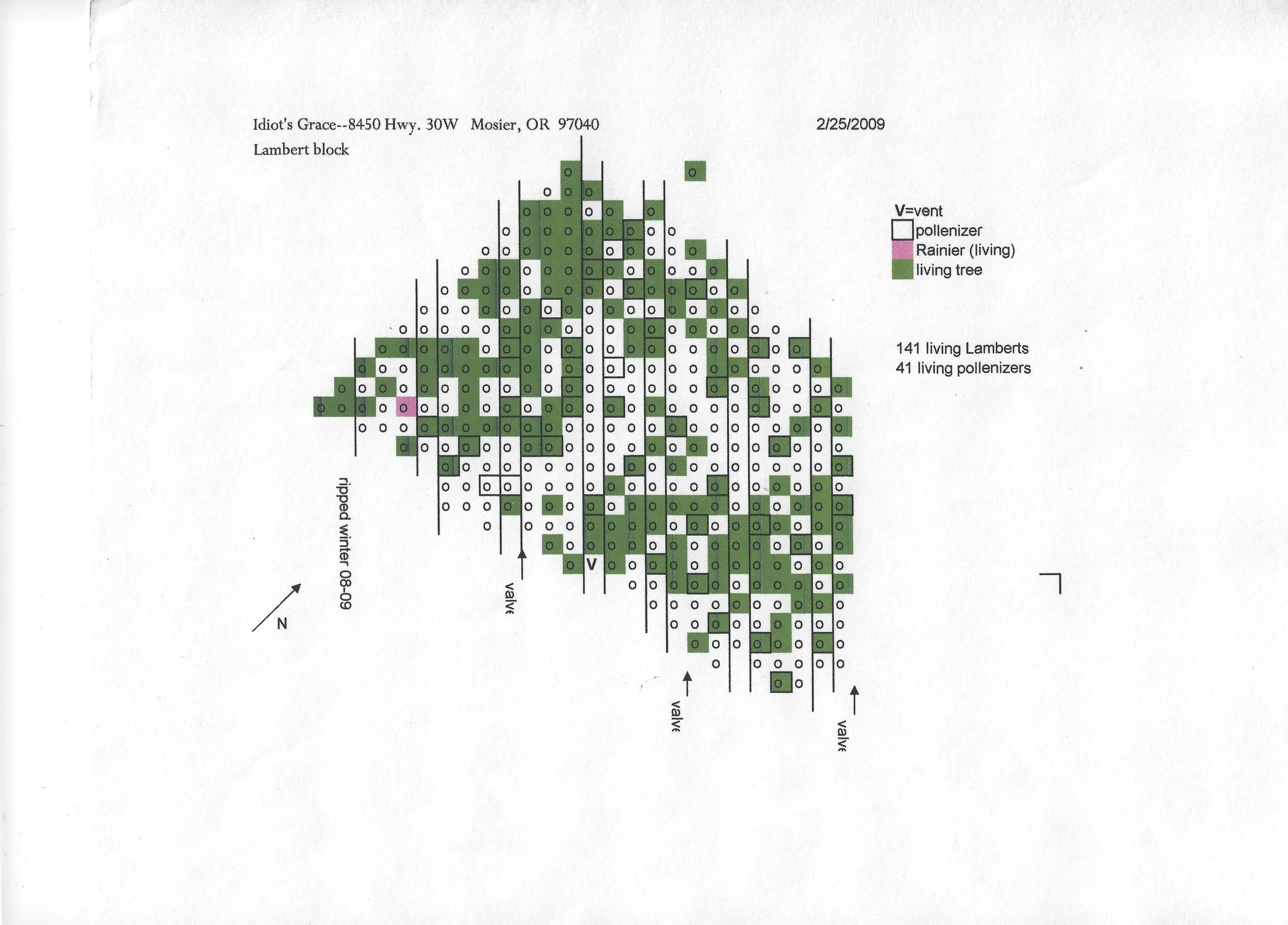
A printed diagram of a botanical study showing a plant's structure with various symbols and colors representing different plant parts and conditions, including labels for a vent, pollinizer, rainier, and living tree, with handwritten notes and annotations.
A seating chart for an auditorium or theater, designed in a diagrammatic style with circles representing seats. The seats are arranged in a heart shape with labels indicating section names, rows, and areas labeled 'Windbreak' and 'irr. main'. The chart is printed on off-white paper.
Cross-stitch pattern in the shape of the state of Oregon with an arrow pointing north; includes address and date.
Hand-drawn sketch of a tennis court on graph paper with measurements and notes, including a layout of the court, dimensions, and various annotations related to tennis court lines and features.
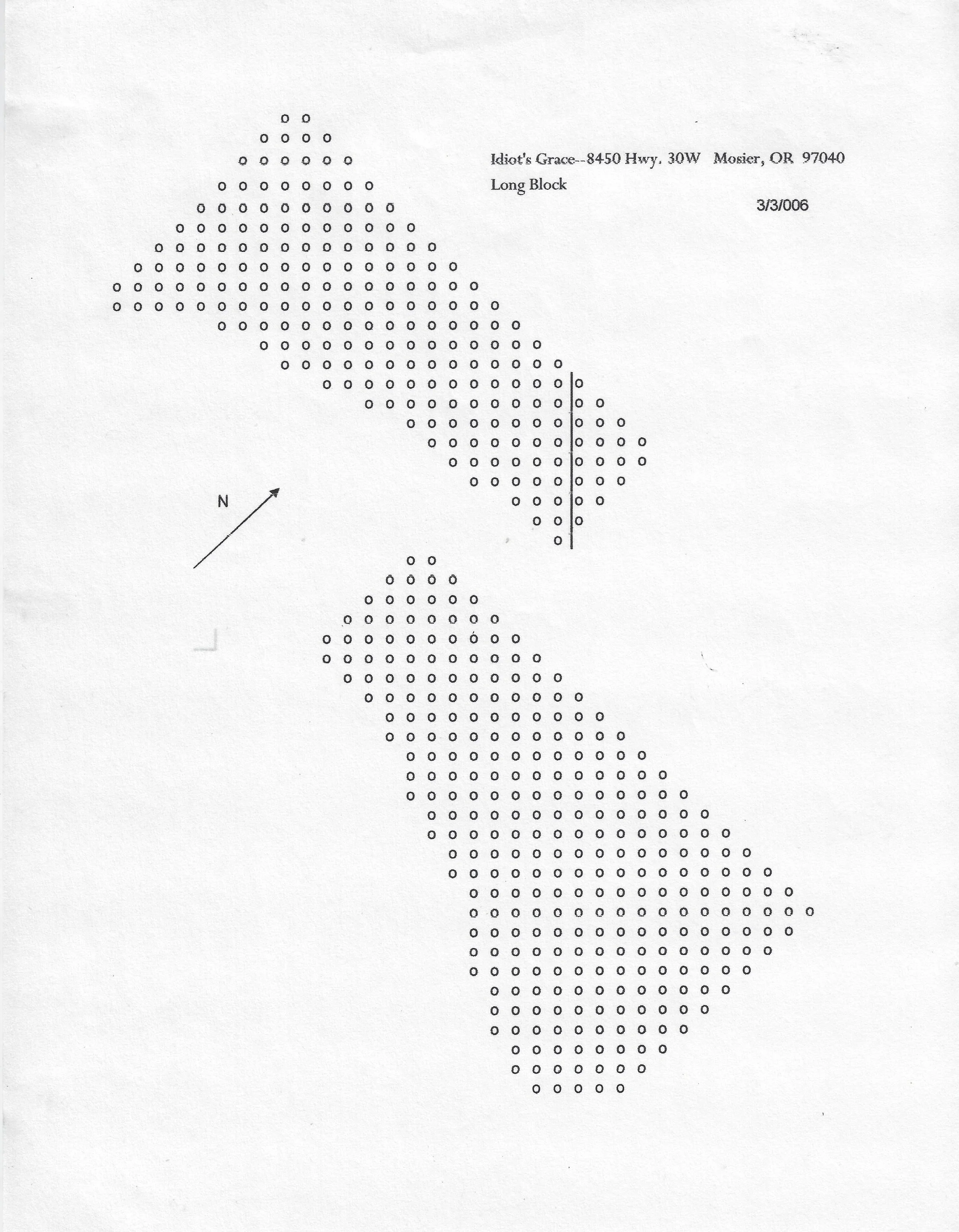
Diagram of two bumblebee hives with marked pollenizer locations, handwritten notes on hive clarity, location, and the number of places, arrow pointing north.
Handwritten notes about pruning season 2008-2009, including instructions for pruning Bosc and Well Pears, with diagrams indicating tree sections and personal notes surrounding the main text.
Handwritten sketch of a gardening plan for a cider orchard, including details about tree spacing, planting dimensions, and soil considerations, with annotations and diagrams.
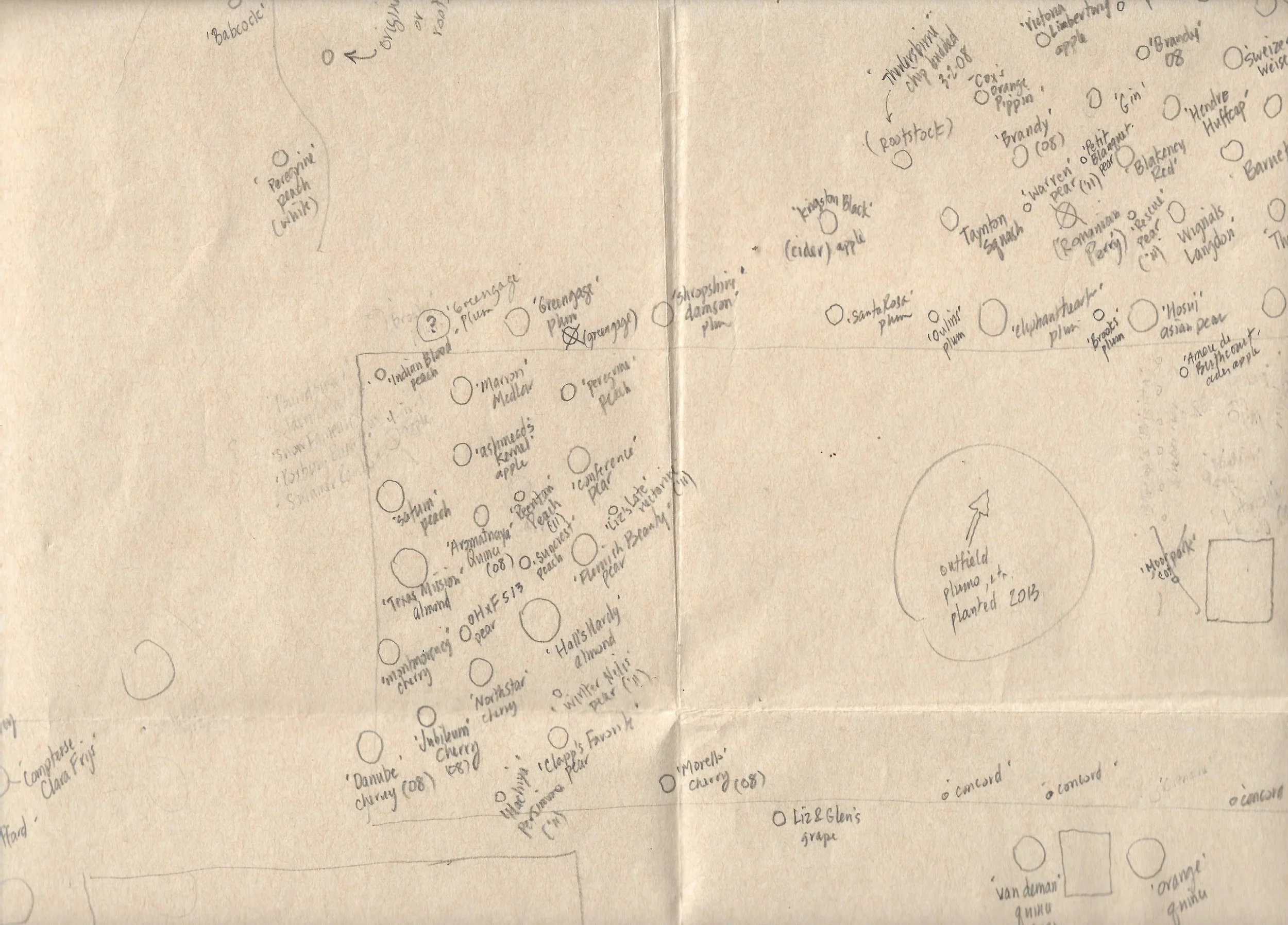
Hand-drawn garden map with various labeled plants and trees, including apple, cherry, pear, and plum, with some notes and symbols indicating locations and types of plants.
Handwritten notes and plans for a 2011 poll harvest event, including dates, fruit varieties, and instructions for picking and use of fruit, with some sketches and annotations.
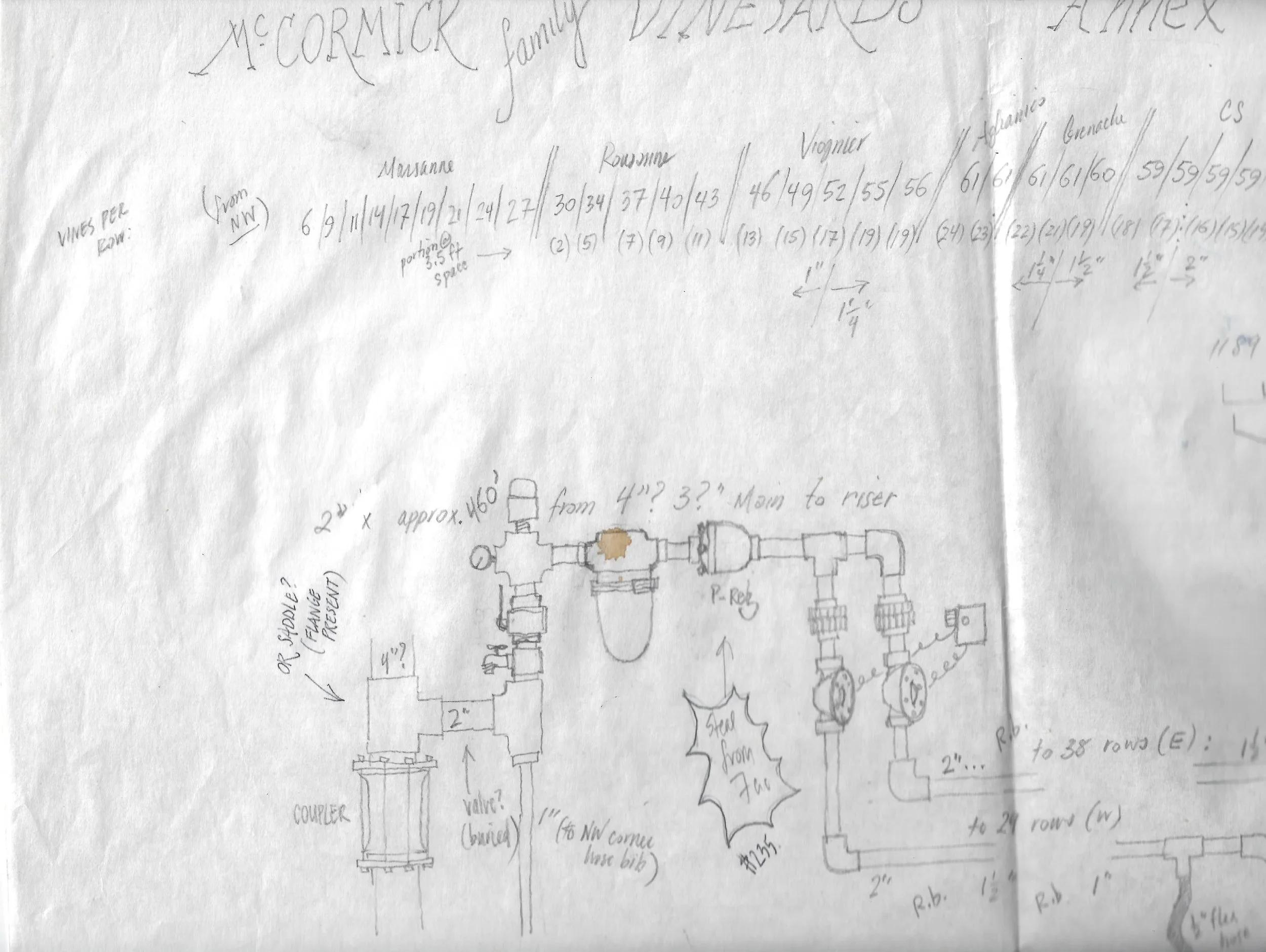
Hand-drawn engineering schematic or technical diagram with handwritten notes, measurements, and labels related to a family of objects or devices. Includes sketches of components, labels like 'P-Rel', and references to measurements and parts.
A map of a block of organic pear trees.
A map of an organic orchard in Mosier, Oregon.
A map of an organic orchard near Hood River, Oregon.
A map of an organic orchard and vineyard in the Columbia Gorge.
A map of Idiot's Grace in the Columbia River Gorge.
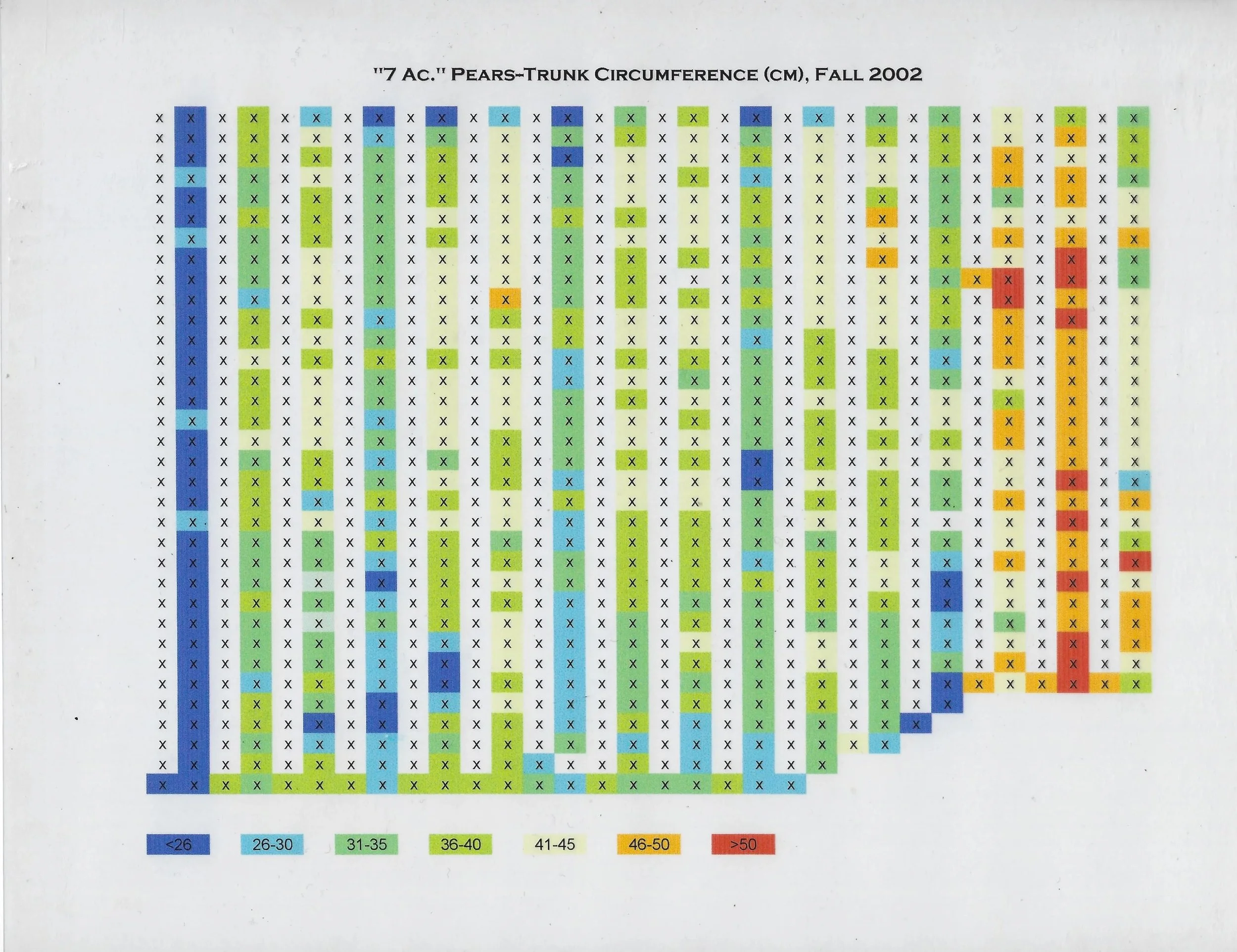
Color-coded chart showing pear trunk circumference measurements in centimeters from fall 2002, with a legend indicating measurement ranges from less than 26 to greater than 50.
Color-coded map of an orchard area with markings and handwritten notes related to tree conditions and measurements.
Hand-drawn color-coded tree diagram with notes, measurements, and percentages, indicating different tree health statuses and sizes, with annotations and labels for a forest survey.
Hand-drawn map of a tree planting plan on graph paper, with labeled areas, notes, and symbols indicating trees, tubes, and removal details, including a total of 379 plant spots across 7.83 acres.
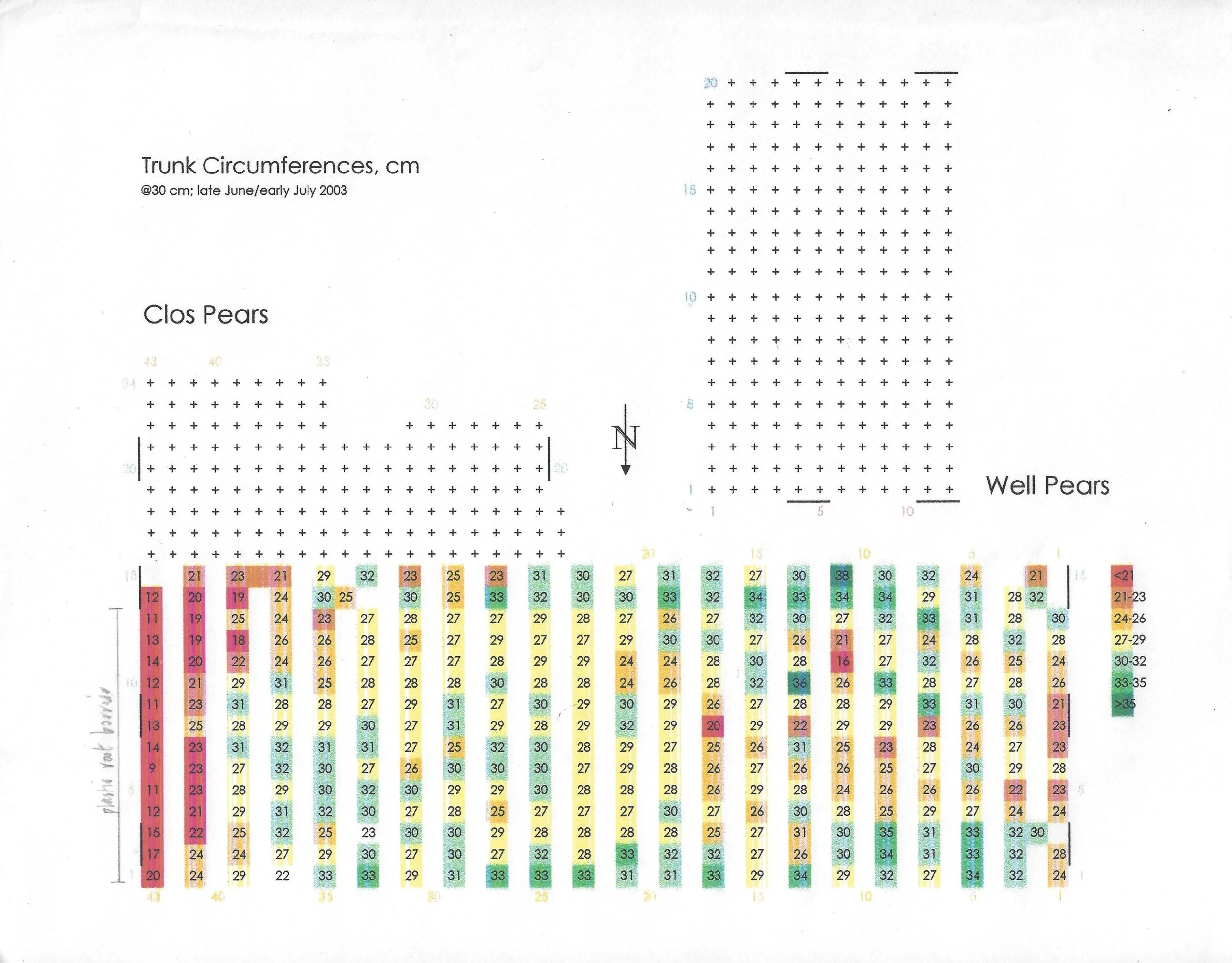
A chart showing trunk circumferences in centimeters for different types of peaches, with categories for close and well peaches, and numerical data in various colors from June and July 2003.
A map of an organic cherry orchard in Mosier, Oregon.
A map of an organic block of cherries at Idiot's Grace.

“Irene is the city visible when you lean out from the edge of the plateau at the hour when the lights come on, and in the limpid air, the pink of the settlement can be discerned spread out in the distance below: where the windows are more concentrated, where it thins out in the dimly lighted alleys, where it collects in the shadows of gardens, where it raises towers with signal fires; and if the evening is misty, a hazy glow swells like a milky sponge at the foot of the gulleys.

              Travelers on the plateau, shepherds shifting their flocks, bird-catchers watching their nets, hermits gathering greens: all look down and speak of Irene. At times the wind brings a music of bass drums and trumpets, the bang of firecrackers in the light-display of a festival; at times the rattle of guns, the explosion of a powder magazine in the sky yellow with the fires of civil war. Those who look down from the heights conjecture about what is happening in the city; they wonder if it would be pleasant or unpleasant to be in Irene that evening. Not because they have any intention of going there (in any case the roads winding down to the valley are bad), but Irene is a magnet for the eyes and thoughts of those who stay up above.

At this point Kublai Khan expects Marco to speak of Irene as it is seen from within. But Marco cannot do this: he has not succeeded in discovering which is the city that those of the plateau call Irene. For that matter, it is of slight importance: if you saw it, standing in its midst, it would be a different city; Irene is a name for a city in the distance, and if you approach, it changes.

For those who pass it without entering, the city is one thing; it is another for those who are trapped by it and never leave. There is the city where you arrive for the first time; and there is another city which you leave never to return. Each deserves a different name; perhaps I have already spoken of Irene under other names; perhaps I have spoken only of Irene.”

Italo Calvino, Invisible Cities